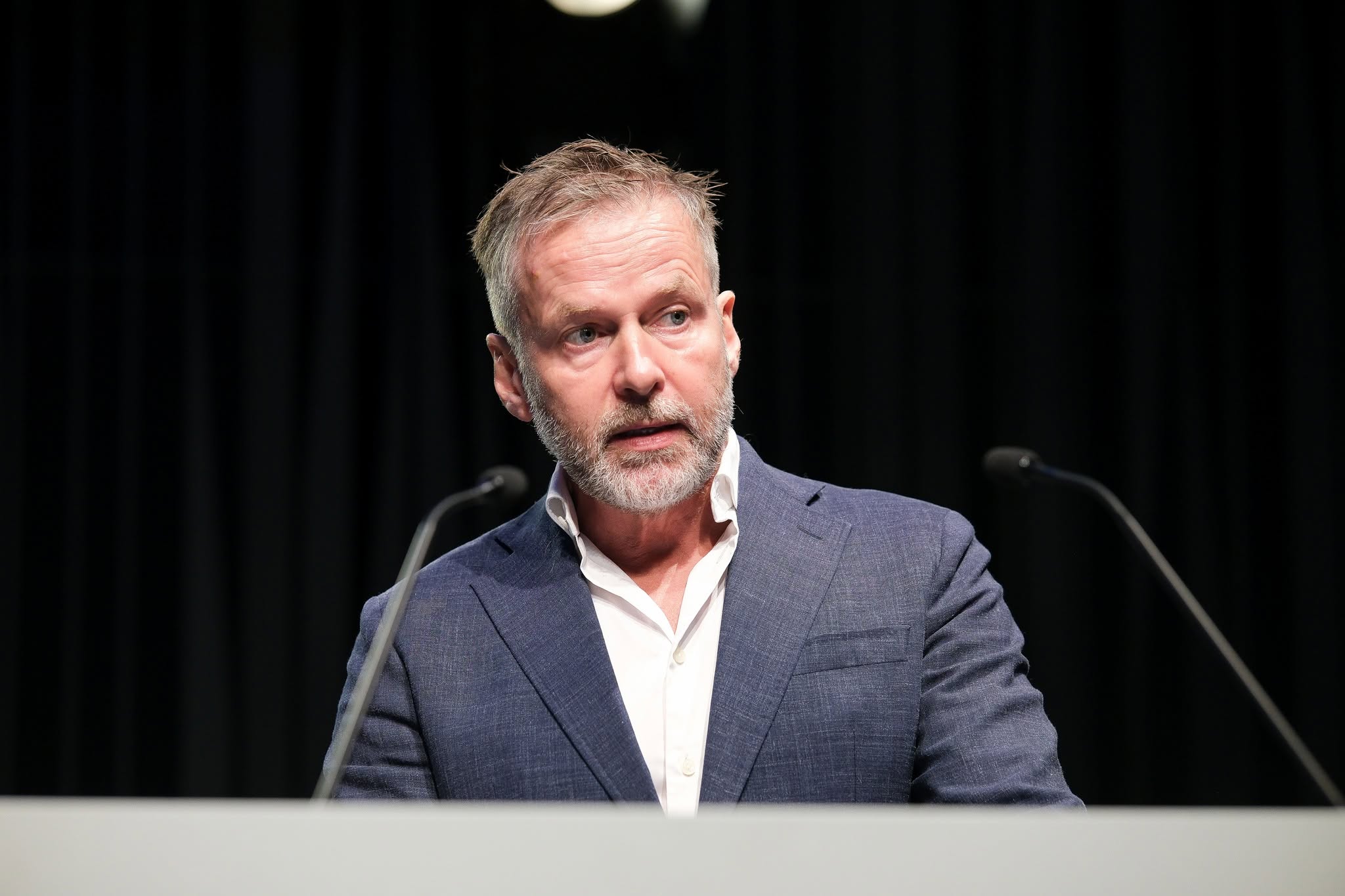
Iceland has a unique competitive advantage in land-based salmon farming, with the potential to develop a major new export industry in the coming years. However, clear regulations and a predictable business environment are essential to realising this opportunity. This was a key message from Orri Hauksson, Chairman of First Water, at Seafood Day 2026, held at Harpa Convention Centre in Reykjavík on 4 November organized by Deloitte and Fisheries Iceland.
In his presentation, Land-based Salmon Farming – A Natural Competitive Advantage for Iceland, Orri highlighted Iceland's access to clean geothermal seawater, renewable energy, available land and proximity to key export markets. Planned investments by four Icelandic land-based salmon farming companies total approximately €3.7–4.4 billion, with the industry potentially generating €1.1–1.5 billion in annual export revenues within five to seven years.
First Water is already among the first land-based salmon farming companies in the world to regularly harvest and export 5 kg head-on gutted (HOG) salmon. The company has sold more than 4,000 HOG tonnes of salmon to international markets, and construction is underway to double its annual production capacity to 10,000 HOG tonnes.
Orri also emphasised that private investment has laid the foundation for this new export industry, with hundreds of millions of euros already committed. To support further growth, Iceland needs a clearer regulatory framework covering permits, fees and operating conditions. Long-term predictability is essential to securing investment and ensuring that Iceland can fully capitalise on its natural competitive advantages.
The outlook for Icelandic land-based salmon farming is promising. With its exceptional natural resources, expertise in seafood production and strong connections to international markets, Iceland has the foundations to become a global leader in sustainable salmon farming. Companies such as First Water are already demonstrating what is possible, turning Iceland's natural advantages into high-quality products, new jobs and valuable exports. With continued investment and a supportive operating environment, the industry has the potential to become an important pillar of Iceland's export economy for decades to come.